The Button
Collection:CSM Museum & Study Collection
Date: 2025
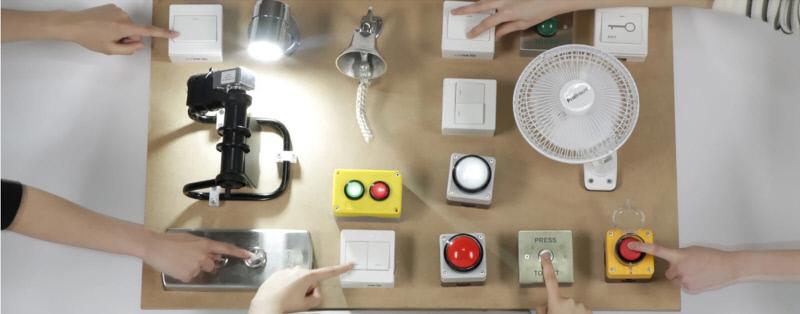
Medium: MDF, found buttons, LED lights, lamp, bell, 3D printed joints, fan, Arduino, digital film
Object number: GD.2025.38.CC.2
Description2. Digital film
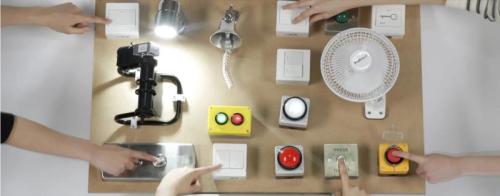
A film produced as part of Wendi Jiang's final project installation for The Button.
Description by the artist:
The Button began with a simple concept: observing and archiving the buttons I pressed
over the course of a single day. These ranged from functional, everyday interactions such
as light switches and elevator buttons, to the more intangible, almost unconscious
touches that shape our routines. By recording each encounter, I sought to foreground the
otherwise invisible intereaction that punctuate contemporary urban life.
The zine brings these observations together in a playful, yet systematic form. Through
RISO printing, with its distinctive layering of colours and textures, the work takes on a
tactile, archival quality. As part of a installation, the zine functions as both a record and a narrative device. It reveals how design can be used to collect traces of the everyday, create alternative forms of memory, and invite reflection on human–technology interaction. By transforming mundane encounters into printed matter, the work balances humour, precision, and critical observation, while questioning how we might reframe the ordinary through acts of archiving and reflection.
A film produced as part of Wendi Jiang's final project installation for The Button.
Description by the artist:
The Button began with a simple concept: observing and archiving the buttons I pressed
over the course of a single day. These ranged from functional, everyday interactions such
as light switches and elevator buttons, to the more intangible, almost unconscious
touches that shape our routines. By recording each encounter, I sought to foreground the
otherwise invisible intereaction that punctuate contemporary urban life.
The zine brings these observations together in a playful, yet systematic form. Through
RISO printing, with its distinctive layering of colours and textures, the work takes on a
tactile, archival quality. As part of a installation, the zine functions as both a record and a narrative device. It reveals how design can be used to collect traces of the everyday, create alternative forms of memory, and invite reflection on human–technology interaction. By transforming mundane encounters into printed matter, the work balances humour, precision, and critical observation, while questioning how we might reframe the ordinary through acts of archiving and reflection.