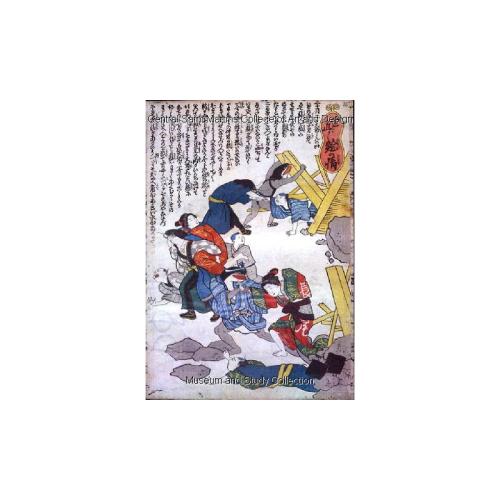
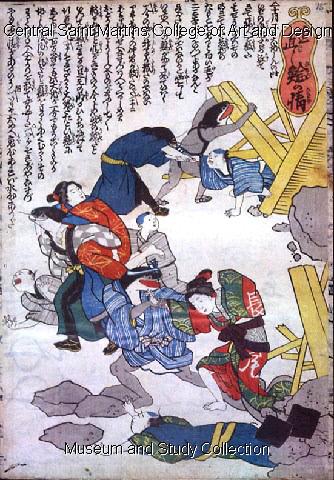
Namazu-e (鯰絵) Yonaoshi Namazu no Jo (世直し鯰の情, Sympathy by a Catfish of Social Rebuilding)
Collection:CSM Museum & Study Collection
Date: 1855
Medium: O-ban Nishiki-e (大判錦絵, large-format coloured print)
Object number: O.11.15
DescriptionNamazu-e (鯰絵, catfish pictures) are published during the Edo period. They were published in large numbers following the Ansei earthquake (安政の大地震) of 2 October 1855, based on the folk belief that an earthquake was caused by a large catfish active underground.
In these words, a conversation between the people and the catfishes is described, in which the catfishes say that they were saddened by this unjustified bad reputation and that it was the catfishes who saved the people after the earthquake, not the Ise Shrine's sacred horses, and that they only saved those who did not speak ill of them.
This catfish painting is titled ‘Yonaoshi Namazu no Jo (世直し鯰の情, Sympathy by a Catfish of Social Rebuilding).' Many of Namazu-e were often produced underground and did not pass the censors. The term ‘Yonaoshi, Social Rebuild' represents criticism of the policies of the Edo shogunate, and people utilized catfish to criticise the shogunate's administration. This print shows the political unrest that followed the great earthquake.
In these words, a conversation between the people and the catfishes is described, in which the catfishes say that they were saddened by this unjustified bad reputation and that it was the catfishes who saved the people after the earthquake, not the Ise Shrine's sacred horses, and that they only saved those who did not speak ill of them.
This catfish painting is titled ‘Yonaoshi Namazu no Jo (世直し鯰の情, Sympathy by a Catfish of Social Rebuilding).' Many of Namazu-e were often produced underground and did not pass the censors. The term ‘Yonaoshi, Social Rebuild' represents criticism of the policies of the Edo shogunate, and people utilized catfish to criticise the shogunate's administration. This print shows the political unrest that followed the great earthquake.